
Should I trust a red-door number I found online?
No. Use the method on your panel. Line-cross totals 6 and 16 are both Unverified. Segment strings, triangle fills, and extracted codes copied from another save are Unverified too.

MONOMOON puzzles by method: red-door counts, symbol pairs, the swamp elevator, and the four-part clam. No posted codes. Softlock notes through hotfix 1.0.10.
Knowledge gates, not upgrades. Treat an early red door as a later page, not a softlock.
~13 min read
MONOMOON puzzles on Steam app 3285880 are knowledge gates. A red door, the swamp elevator, and the underwater clam stall players first. This page gives the method for each board. It does not print a finished code.
Community totals, chest indexes, and digit strings that disagree with each other are marked Unverified. If two answers are both in circulation, count the board in front of you.
| Board | Method to start |
|---|---|
| Red door, lines | Count every four-way crossing, including ones that are not a clean X. |
| Red door, stacked marks | Combine the top symbol with the bottom symbol. Do not assume an equals sign. |
| Red door, dot on a digit | Seven-segment style: the dot names a stroke. Ask only if that stroke is present. |
| Red door, triangles | Moon dots versus lit edges. Deduce neighbors the way a mines count forces a cell. |
| Red door, old answer glowing | Copy only the digits under the lights. A posted full code is Unverified. |
| Swamp elevator | Map moon cursor changes the bottom numbers. Translate them with the Tome. |
| Giant clam | Four parts, two notes each. Cracks decide the join. Read notes upright. |
| Purple sliders | Three blocks, a 4×4 grid, two extra cells. One block leaves. Two sit on buttons. |
| Diamond grid | Place symbols in slots 1 through 18. The odd mark that shares a border is the exception. |
Matched by build plan, shared topics, and guide progression — not random related links.
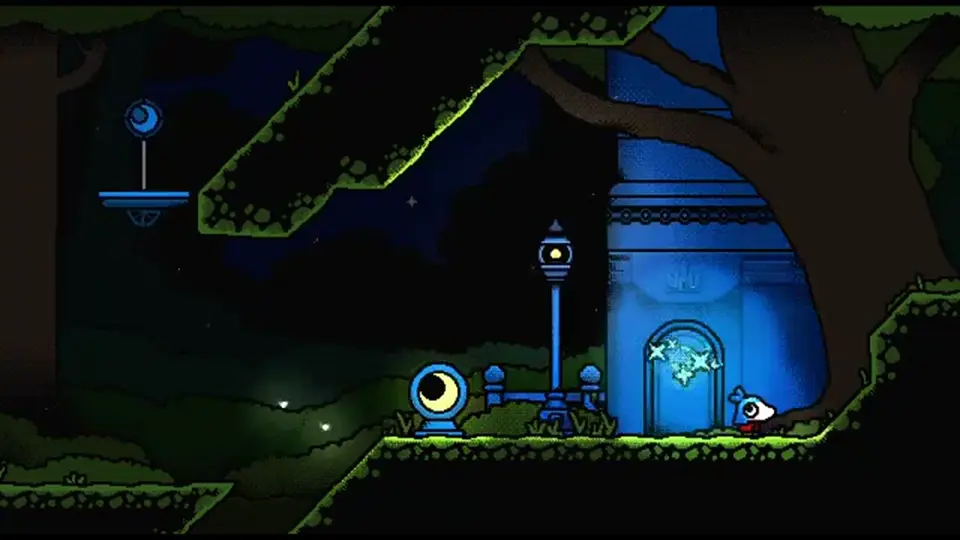
A moon marked on a door is a knowledge gate. You already have the tool that lights the world. The door wants a rule from a page, an observatory, or a previous panel — not a damage upgrade. Community writeups split later red doors into five methods. Indexes such as “puzzle 5” or “puzzle 9” are Unverified labels, not names this page will treat as official UI.
The line board wants a count of crossings, not a vibe about “how busy” the drawing is. A crossing counts when four line ends meet. Include joints that are skewed, thick, or not a textbook X. A T-junction has three ends and is a different shape — do not fold those into the four-way total unless the page in your Tome says the rule is wider.
Two community totals, 6 and 16, are both in circulation. Both are Unverified. They come from people counting different joints. Mark every four-way meet on your own door, once, and use that count. If your count matches neither rumor, keep yours.
Another board shows a mark above a mark, sometimes beside a familiar digit such as 0, 1, or 2. Read the column as a pair. The top symbol and the bottom symbol combine. Players have mistaken one mark for an equals sign. Which mark that was is Unverified. Treat a familiar-looking operator as its own symbol until the Tome shows it.
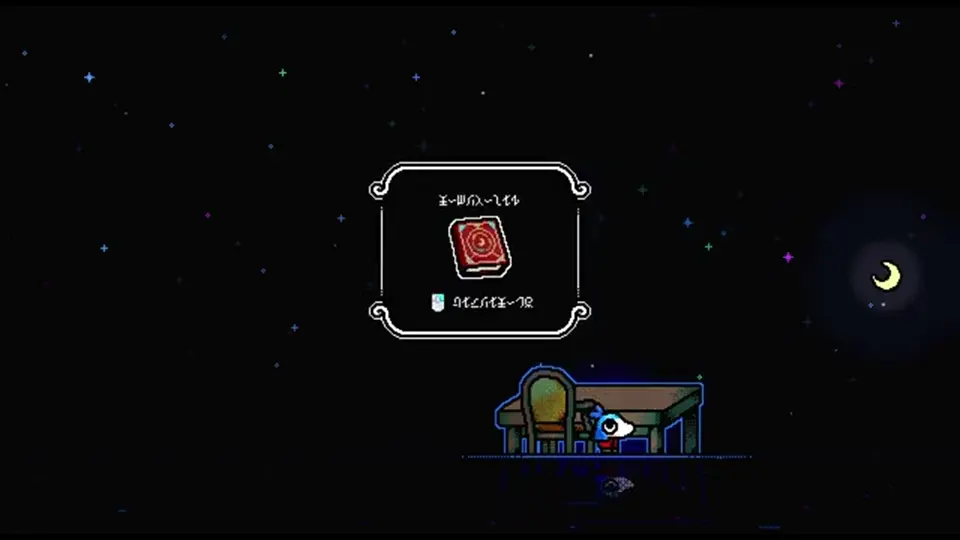
Write the pair, then the digit it sits with. Entering the first number you recognize, alone, drops the operator. The page that teaches the combination is the book from the opening room. The first page is symbols in a script you do not know yet — that script is the key, not flavor.
A later panel looks like a digit built from strokes, close to a seven-segment figure. A dot sits on one stroke. The question is only whether that stroke exists on the digit you are testing. Positions are the usual seven: top, upper left, upper right, middle, lower left, lower right, bottom.
A digit drawn with all seven strokes answers present for any dot. A digit drawn with only two strokes on one side answers absent for the top bar. Those are examples of the rule, not a code. You answer present or absent per dot, on your panel. A finished digit string from outside your save is Unverified, even when the segment rule is the right method.
The triangle board behaves like a mines grid. The moon reveals dots. The number of dots is tied to how many edges of the triangle light. A high count forces nearby edges on. A zero-style count forces them off. Work from a corner where the count leaves only one legal pattern, then move inward.
Draw the grid yourself. A filled solution copied from someone else’s panel is Unverified, and a rotated triangle makes that copy land on the wrong edges. If the moon is not showing dots, you are not on this method yet — park the light the way the moon guide describes, then recount.
The last red-door family points back at answer boxes you already earned. The new panel repeats those shapes and lights specific positions. Copy only the digits that sit under the lights. Leave the unlit digits out.
A community note describes the grouping as 1, then 2, then 1, and calls the result a four-digit code. Both the grouping and the length are Unverified until your panel shows them. The method does not change if the length differs: extract the lit positions, in the order the panel reads, and enter that. A code that reuses an entire earlier answer is the common miss.
When you can name which of the five methods is on screen, use the fork in the next section before you mix a line count into a segment dot.
Pick the row that matches the board in the room. Do that method. A second method from a different door will invent a number your panel never asked for.
| On screen | Method | Skip |
|---|---|---|
| Lines crossing on a red door | Count four-way meets on this door only. | Totals 6 and 16 — both Unverified |
| Two marks stacked, maybe beside 0, 1, or 2 | Combine top and bottom. Check the Tome before you call a mark an equals sign. | The first digit alone |
| A dot sitting on a digit stroke | Ask if that stroke exists. Answer per dot. | A copied digit string |
| Triangles and moon dots | Dots versus lit edges. Deduce from a forced corner. | A filled grid from another save |
| An old answer box with some cells glowing | Extract the lit digits in panel order. | Pasting the whole earlier answer |
| Swamp elevator and a map | Hover the top-center moon icon. Read the bottom digits that change. Translate with the Tome. | Any posted elevator code |
| Underwater pieces and a scroll | Four parts, cracks for order, rotate, two notes each, upright on the scroll. | Notes read sideways |
| Purple blocks on a 4×4 with two extra cells | Plan the exit first. One block leaves. Two rest on buttons. | Pushing the exit block into a corner |
| A diamond grid numbered 1–18 | Slot the page symbols. Place the odd border-sharing mark by hand. | A memorized 1–18 string |
| Right edge of the map will not open | Confirm hotfix 1.0.10. If the build is current, hunt a page or an observatory. | A softlock report on an old build |
Elevator digits are the case that looks like “a code someone should have posted” and is actually your map. That cursor is next. Sliders and the diamond grid are boards, not doors, so they sit after the clam. The right-edge row is a patch check, and it is the last section.
The swamp elevator is a light grid plus a map trick. The Tome maps symbols to digits. The map supplies the digits, and only while a specific cursor is in a specific place.
Open the map at the elevator. Move the cursor onto the small moon icon at the top center. Watch the numbers along the bottom. They change while that icon is under the cursor, and they are not a second moon you aim in the world. Write down the digits you see on your map. Translate them with the symbol-to-digit page in the Tome. Enter the translation on the light grid.
This page does not print the finished code. The bottom numbers depend on what your map is showing, so a code from another player can be a different set of digits. If the bottom row does not change, the cursor is not on the moon icon — it is easy to hover a nearby mark and think the map is broken.
If you do not have the symbol page yet, leave the elevator. Observatories and the far-right telescope path are how those pages show up. The order of regions is the walkthrough. The clam, if you are underwater instead of in the swamp, is the next board.
The giant clam is a music puzzle made of physical parts. There are four parts. Each part carries two notes. You join the parts, you rotate them, and you read the notes in one direction. The moon still works over water if you need light on a crack — aim is the moon guide, not a second solve.
| Step | What you check |
|---|---|
| Four parts | You are missing a piece if you only have three. Search the water before you force a join. |
| Cracks | The crack on one edge matches the crack on the next edge. That match is the order. |
| Rotation | Turn a part until the cracks meet. A part that almost fits is rotated, not a different part. |
| Two notes | Each joined part contributes a pair. Do not drop one note because the other is louder. |
| Upright scroll | Read each pair in the direction the scroll treats as upright. Sideways is a different pitch. |
| Tome rule | A page states the extra music rule. Apply that page after the shape is whole. |
A melody from a thread skips the rotation you actually have. If your cracks join in a different spin, the upright direction changes and the notes change with it. Build the shape, then read. The creature that holds the puzzle is listed on creatures. Sliders and the diamond grid are the boards that fail for a blocked exit or an odd symbol, which is next.
These two boards are not red doors and not the elevator. One is a sliding-block exit. The other is a numbered symbol grid. Solve the one that is on screen.
The purple puzzle is three sliding blocks on a 4×4 grid, with two extra cells on the right. One block has to leave the puzzle area through that side. The other two have to rest on buttons. Plan the exit before you slide. A block parked in the extra cells can seal the only way out, and the board will look unsolvable when it is only clogged.
If you cannot see a path that frees one block and parks the other two, undo to the start. Forcing the exit block into a corner is the usual stall. No minimum-move list is verified for this page, so a posted step count stays Unverified. The goal shape is the check: one block gone, two blocks on buttons.
The diamond grid takes symbols from the diamond-map pages and puts them in slots numbered 1 through 18. Most symbols match a slot by the mark printed on the page. One page can show a symbol that shares a border with its neighbors and still sits in the odd position. That highlight is the exception you place by hand. Confirm the odd mark on your own pages before you treat a neighbor as the answer.
Community notes call this the fourth Tome chest. That index is Unverified. Your chest count is whatever your save shows. Do not fill slots 1–18 from a string you remember from another page — a shared border is exactly how that string lands one slot off. Pages, including the far-right leaves, are catalogued on the Tome.
If neither board is on screen and the right edge of the map still will not open, the next section is the patch check.
Often it was a knowledge gate that looked like a softlock. Hotfix 1.0.08 changed that right-side map spot for that reason. Hotfix 1.0.10 continues the softlock fixes. Check the build before you abandon a save.
| Build | What changed for a stuck room |
|---|---|
| 1.0.08 | Right-side false softlock. Also a lilypad edge, stuck pressure plates, high-FPS goat interaction, Deck performance, and turning during a locked action. |
| 1.0.10 | More softlock fixes, a VSync toggle, a crash when you die on a bad collision, and a few visual fixes. |
| Current, and still sealed | A missing page or observatory. The geometry is not the bug. Go find the clue. |
| Current, and you are clipped into a floor | That is a collision bug, not a red-door method. The 1.0.10 crash fix covers dying on a bad collision. Reload the checkpoint if you are wedged. |
A knowledge gate still has doors, floors, and a way back to a checkpoint. You are missing a symbol, a telescope, or a page. Public notes put two late Tome pages on the far-right telescope path. That placement is Unverified. Check the Tome against the leaves you actually hold. Players have reached that edge with observatories already done and still needed a clue sitting in the current room. Search the room before you leave it.
A real stick is different: a lilypad edge you cannot walk off, a pressure plate that stays down, or a body wedged in collision. Those are the 1.0.08 and 1.0.10 cases. Update, reload the checkpoint, and only then repeat the puzzle method. Region layout for the swamp, the purple zone, and the right side is on areas.
Next: match one symbol on the Tome, then hit observatories before doors in the walkthrough.
Moon radius, if a board only reacts while the light is parked: moon.
Where the swamp, the purple sliders, and the right edge sit: areas. The clam as a creature: creatures.
No. Use the method on your panel. Line-cross totals 6 and 16 are both Unverified. Segment strings, triangle fills, and extracted codes copied from another save are Unverified too.
It is not printed as a single code. The Tome maps symbols to digits. The map changes the bottom numbers when the cursor sits on the top-center moon icon. Read your map.
Four parts, two notes on each. Join them by cracks, rotate until the cracks meet, and read each pair in the scroll’s upright direction. A copied melody skips that rotation.
Hotfix 1.0.08 changed that spot because players mistook a knowledge gate for a softlock. Hotfix 1.0.10 fixes more softlocks. On 1.0.10, a sealed edge is a missing clue.
Three blocks on a 4×4 grid with two extra cells on the right. One block leaves. The other two rest on buttons. Plan the exit before you slide. A posted step count is Unverified.
That index is Unverified. The working rule is slots 1 through 18, plus one odd symbol that shares a border and sits in the wrong-looking place. Confirm the chest on your pages.
Matched by build plan, shared topics, and guide progression — not random related links.